Hybrid Learning Isn’t a Trend — It’s How Learning Actually Works Now
Written By
EngageSlide Team
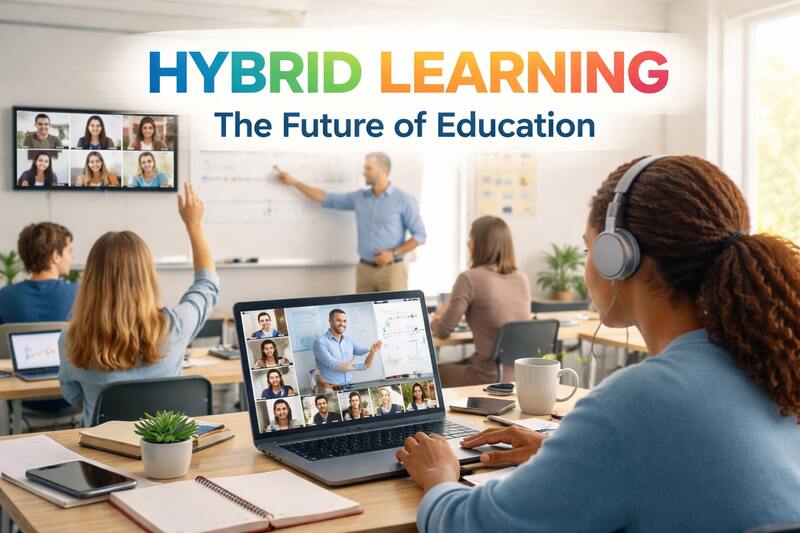
The Classroom Doesn’t Look the Same Anymore
Walk into a classroom today and you’ll notice something different.
Some students are sitting in front of you.
Others are joining from their bedrooms, libraries, or even different cities.
A teacher is speaking — but also reading chat messages, launching polls, sharing screens.
This isn’t a temporary workaround.
This is hybrid learning.
Hybrid learning models reflect how people actually live, work, and learn today — connected, flexible, and not limited to one physical space.
And once you understand how hybrid learning works, it becomes clear:
education isn’t going back to “one room, one time, one method.”
So, What Exactly Is Hybrid Learning?
Hybrid learning is a model where in-person and online students learn together, often at the same time, through a mix of physical classrooms and digital tools.
Unlike fully online courses, hybrid learning keeps human connection at its core.
Unlike traditional classrooms, it removes location and schedule as barriers.
Think of it as:
A shared learning experience
Delivered across multiple environments
Designed for flexibility, not compromise
Hybrid learning isn’t about replacing teachers or classrooms.
It’s about extending them.
Hybrid vs. Blended: Why the Difference Matters
These two terms get mixed up a lot — but they’re not the same.
Blended learning usually means:
Students attend class in person
Online materials support learning outside class
Interaction isn’t always real-time
Hybrid learning, on the other hand:
Happens live
Combines remote and in-person students simultaneously
Requires intentional design so everyone feels included
That difference changes everything — from lesson planning to assessment to engagement.
Why Hybrid Learning Exists (And Why It’s Not Going Away)
Hybrid learning didn’t appear by accident. It emerged because traditional models couldn’t keep up with reality.
Students today:
Balance school with work, family, and personal responsibilities
Expect digital access and flexibility
Learn at different speeds and in different ways
Institutions face:
Space limitations
Rising costs
The need to reach broader audiences
Hybrid learning solves real problems — which is why it keeps evolving instead of disappearing.
What a Hybrid Classroom Really Looks Like
Forget the idea of “half online, half offline.”
A successful hybrid classroom is intentionally designed.
You’ll usually find:
Live instruction delivered to both audiences
Digital collaboration tools that work for everyone
Asynchronous materials for flexibility
Frequent interaction, not long lectures
The goal isn’t equal screen time.
The goal is equal participation.
The Real Power of Hybrid Learning
Flexibility Without Losing Structure
Students can join from anywhere — but they’re still part of a shared experience. This balance is what makes hybrid learning different from fully online education.
It allows:
Fewer absences
More consistent participation
Learning that adapts to life, not the other way around
Engagement That Goes Beyond the Classroom
Hybrid learning thrives on interaction.
Polls, live quizzes, chat discussions, collaborative boards — these aren’t extras. They’re essential.
When designed well, hybrid classrooms often see more participation, not less — especially from students who are quieter in traditional settings.
Personalized Learning Paths
Hybrid models make it easier to:
Review recorded explanations
Work at different paces
Revisit difficult topics
Students stop competing for attention and start owning their learning.
Skills That Actually Matter After Graduation
Hybrid learning prepares students for how modern work happens:
Remote collaboration
Digital communication
Self-management
Tech literacy
These aren’t “nice to have” skills anymore. They’re baseline expectations.
Hybrid Learning in Action: Real-World Models
There isn’t one correct hybrid model. Schools and organizations adapt it in different ways.
Some rotate attendance schedules.
Some run fully live hybrid sessions.
Others mix live instruction with self-paced learning.
What they share is a mindset:
learning doesn’t need a single location to be effective.
The Challenges Nobody Should Ignore
Hybrid learning isn’t magic. It comes with real challenges.
Technology gaps still exist.
Teachers need training and support.
Students need guidance to manage autonomy.
The biggest risk?
Treating hybrid learning like a normal class with a webcam.
When hybrid learning fails, it’s usually because it wasn’t designed for hybrid.
How Great Hybrid Learning Is Built
Strong hybrid experiences focus on a few principles:
Clarity — students know what’s expected
Interaction — learning is active, not passive
Consistency — online and in-person students feel equally included
Feedback — students know where they stand
Hybrid learning works best when technology supports pedagogy — not the other way around.
The Future Isn’t Online or Offline — It’s Both
Hybrid learning isn’t a backup plan.
It’s the natural evolution of education.
As tools improve and teaching strategies mature, hybrid classrooms will feel less like compromises and more like the best of both worlds.
Education is becoming:
More human
More flexible
More accessible
Hybrid learning isn’t replacing classrooms.
It’s freeing them from limits they never needed.
Final Thought
Hybrid learning models reflect a simple truth:
learning happens everywhere — not just in one room, at one time.
When educators design for that reality, students don’t just adapt.
They thrive.
Implement This Strategy Effectively.
Transform these academic insights into real-time audience engagement using the right platform.
Try EngageSlide Free